

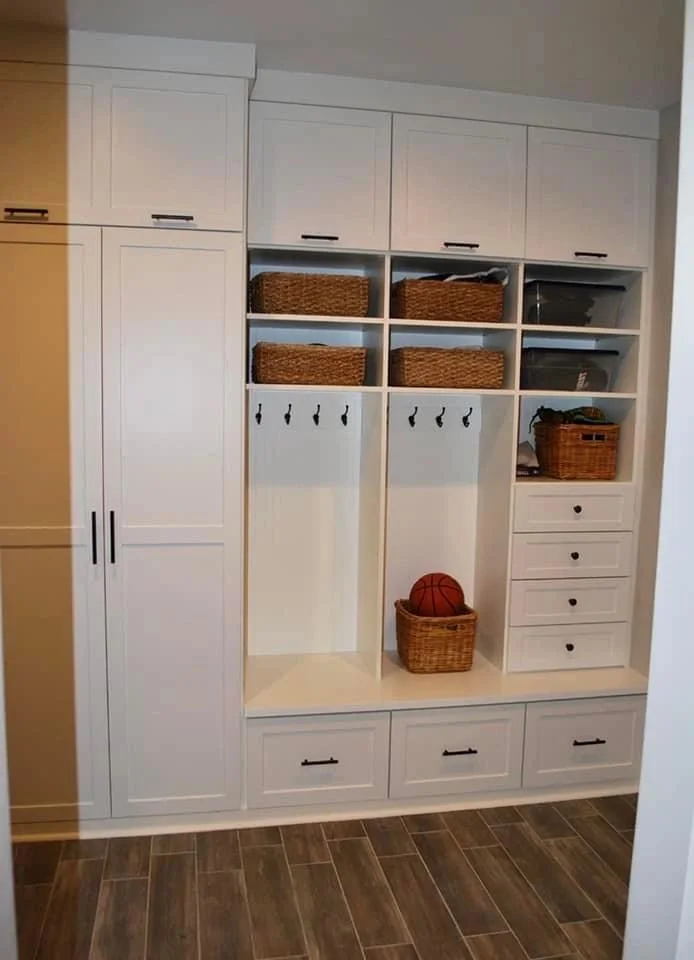
Observe the arrival before changing it.
Watch where belongings land for a few ordinary days. The kitchen counter may be collecting mail because it sits directly on the entry route. Shoes may accumulate beside a door because the planned shoe storage is across the room. These patterns tell you where a solution needs to work.
Avoid judging the household before understanding the layout. A cabinet that requires a detour and several steps to open may be ignored even by people who want an organized home.
Separate daily returns from long-term storage.
The entry area should primarily support arrivals and departures. Coats in use, current bags and everyday footwear need easy access. Off-season gear and items rarely taken outside can often live elsewhere.
If the mudroom becomes the default storage room for the whole house, the daily landing places disappear. Define what belongs there and what does not before deciding how many compartments to add.
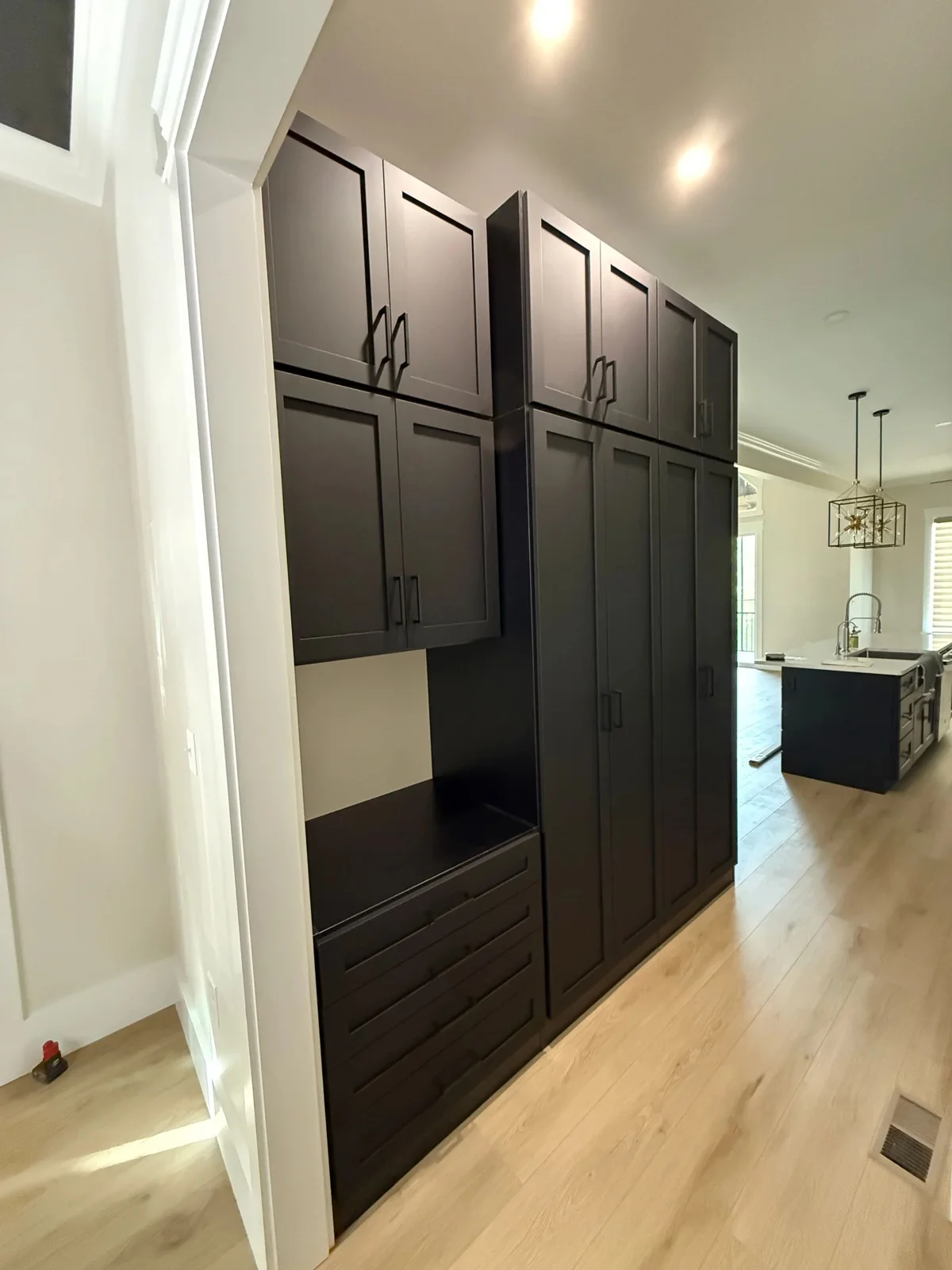
Choose open and closed storage intentionally.
Open hooks and cubbies reduce the effort of putting things away. Doors create a calmer view, but add another action. A mix can work well when daily items remain quick to return and less frequent items are contained.
Think about the users, including children and anyone who finds certain reaches or movements difficult. Storage heights and door hardware should reflect those needs rather than copying a photograph.
Plan for wet, dirty and outgoing items.
Damp clothing and muddy footwear need a practical place that works with the materials and cleaning routine. Discuss care requirements and appropriate drying arrangements. Cabinetry does not eliminate the need to manage moisture.
A small outgoing zone can also be useful for library books, returns or bags prepared for the next morning. Keep it defined so it does not become another permanent pile.
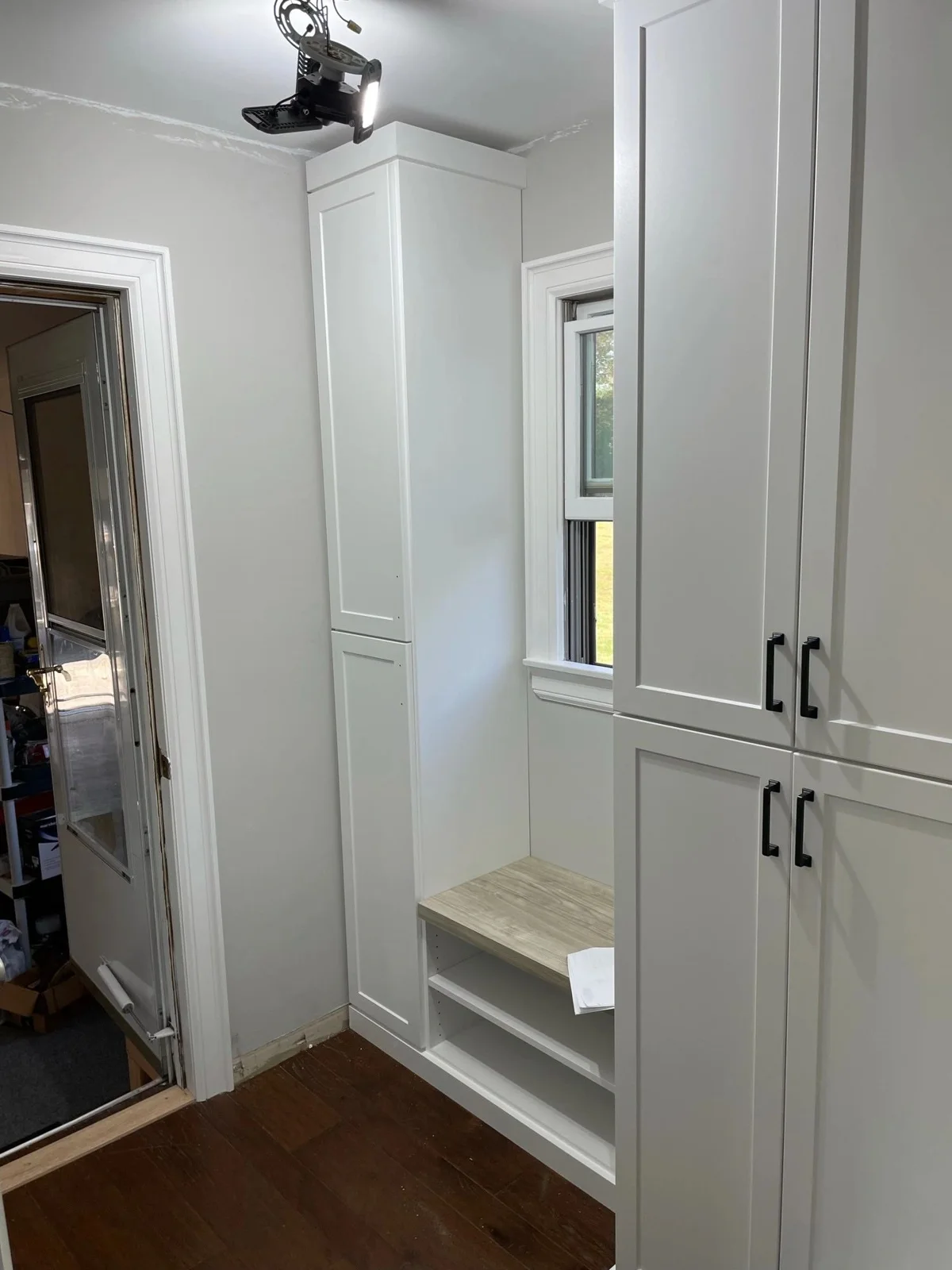
Make the reset short.
A good entry system can be restored without sorting every possession. Clear categories and sensible capacity limits help. If a compartment is consistently overflowing, revisit the category or seasonal rotation rather than adding more small containers indefinitely.
Bring the daily pile into the design conversation through photographs. The things that currently lack a home provide a useful list of requirements for the new drop zone.
Follow One Arrival All the Way Through
Walk in carrying the things you normally bring home. Where does the bag land before your shoes come off? Where does a damp coat go? Where will tomorrow’s outgoing items wait? A drop zone that ignores that order often becomes a beautiful surface for the same old pile.
For a shared entry, start with one daily location per person and one shared outgoing location. Keep seasonal overflow elsewhere when space is limited. If the entry is also a passage, test the bench and open cabinet doors while another person walks past. The photograph with empty cubbies is only one state of the room.
Compare the Choices
| Choice or situation | What to consider | What to check |
|---|---|---|
| Hooks and open cubbies | Fast returns for daily belongings. | Contents remain visible. |
| Closed compartments | A calmer view from adjoining rooms. | Add a step to every return. |
| Shared outgoing shelf | Keeps returns and tomorrow’s items together. | Needs a regular reset so it does not become overflow. |
Put This into Practice
- Photograph the actual arrival pile.
- List the largest bags and longest coats.
- Leave room for door swings and the through-route.