

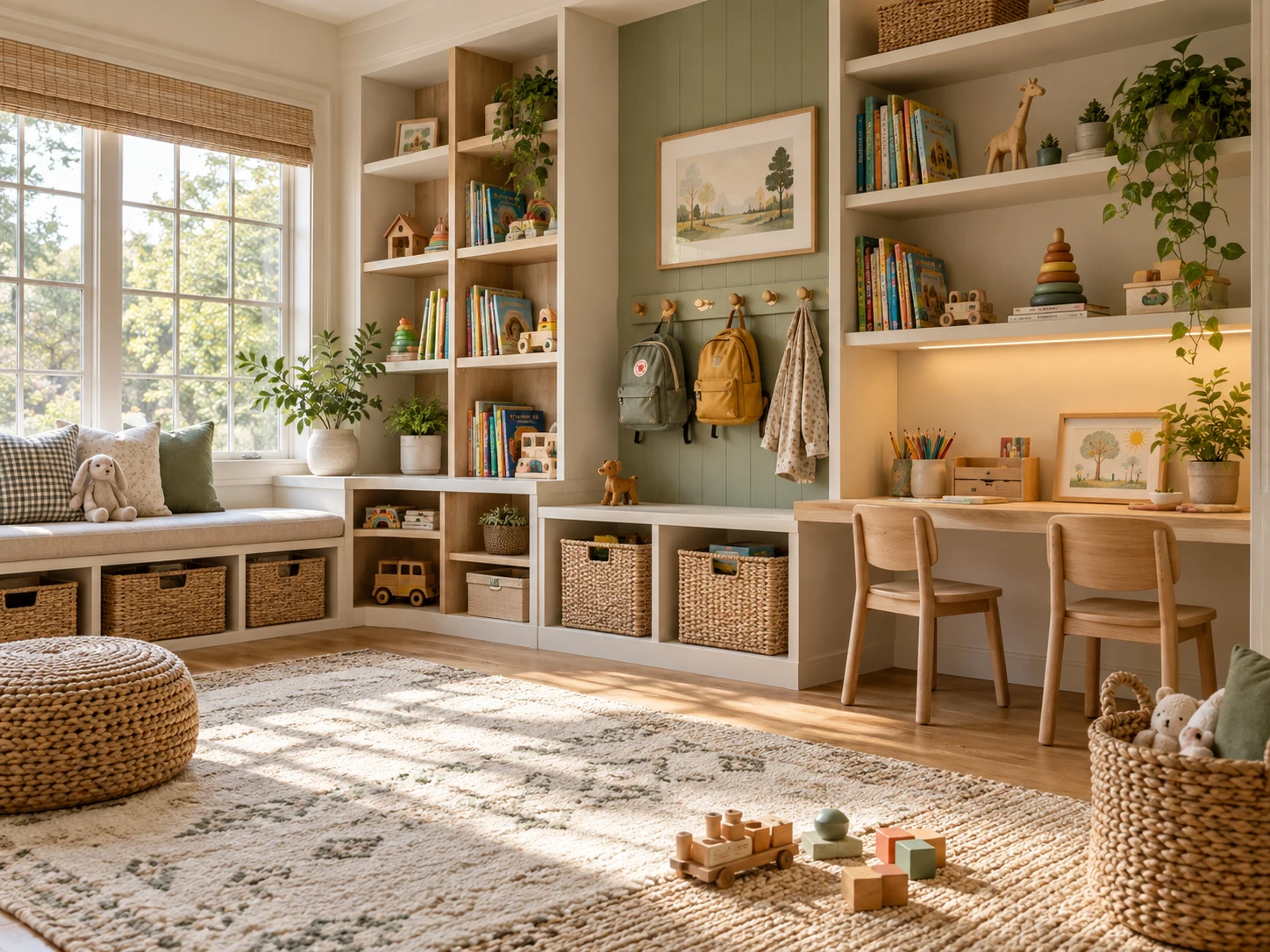
Use categories that make sense to the family.
Adults may prefer very fine distinctions, while younger users need broader categories. Start with the way the belongings are used: school supplies, current toys, everyday clothing or sports gear. Choose a level of sorting that the household can maintain during a busy week.
A beautiful row of containers is not an organization system until everyone knows what belongs in them. Labels or visual cues can help after the categories are agreed.
Match access to the intended user.
Everyday items should be accessible in a way that suits the people using them. Items requiring supervision need a different storage plan. Discuss reach, movement and changing needs rather than assuming one arrangement fits every child or adult.
Cabinet installation and anchoring must suit the selected system and site. Storage should not depend on the assumption that a child will never climb, pull or use a piece in an unexpected way.
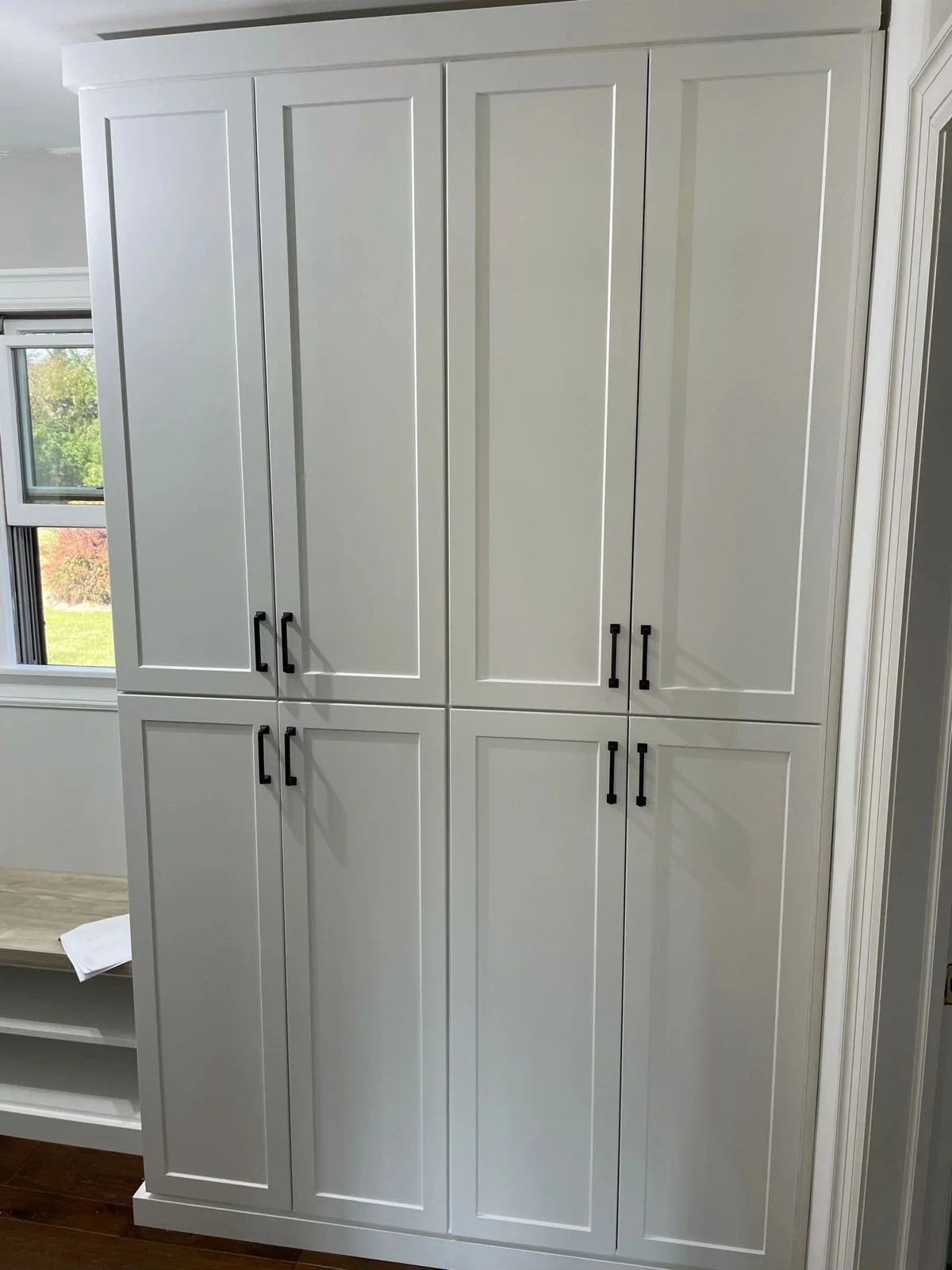
Leave room for growth and rotation.
Clothing becomes longer, hobbies change and school materials multiply. Where a system supports adjustable components, consider how the arrangement could change later. A separate location for occasional or outgrown items helps the active storage remain clear.
Do not use future flexibility as a reason to keep every category indefinitely. A regular decision about what remains in use is still part of maintaining the space.
Put storage near the activity.
Backpacks may belong near the entry rather than in the bedroom. Games may need a shared living-room location. Craft supplies can be easier to manage near the table where they are used.
Following the activity reduces the number of steps required to put things away. It also helps prevent several rooms from accumulating partial versions of the same category.
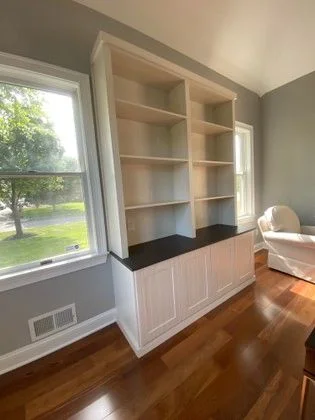
Try the routine before adding complexity.
Watch how the family uses the first arrangement. If a bin is always emptied onto the floor or a drawer is never used, ask whether its location or category is wrong. The answer may be a simpler system rather than another organizer.
For a design consultation, bring the transitions you want to improve: getting dressed, leaving for school or clearing shared space. Those routines are practical measures of whether the new storage is working.
Test the Reset with the Person Who Will Use It
Choose one category, such as school bags or building toys, and establish a temporary return location. Ask the intended user to put the items away without coaching. If the steps are confusing, simplify the category or move the location before buying a large set of organizers.
Broad categories often work better than a series of tiny distinctions during a busy transition. A sports bag can have one accessible home while occasional equipment lives elsewhere. The system should accommodate changing interests and clothing sizes without requiring the family to relearn every location.
Compare the Choices
| Choice or situation | What to consider | What to check |
|---|---|---|
| Daily belongings | An obvious, reachable return location. | Match access to the individual user. |
| Occasional items | A separate rotation or reserve area. | Keep them from crowding the active category. |
| Items needing supervision | Restricted storage appropriate to the item. | Do not assume an upper shelf alone provides protection. |
Put This into Practice
- Start with one difficult transition.
- Use labels or visual cues the household understands.
- Confirm installation and anchoring for the selected cabinetry.