

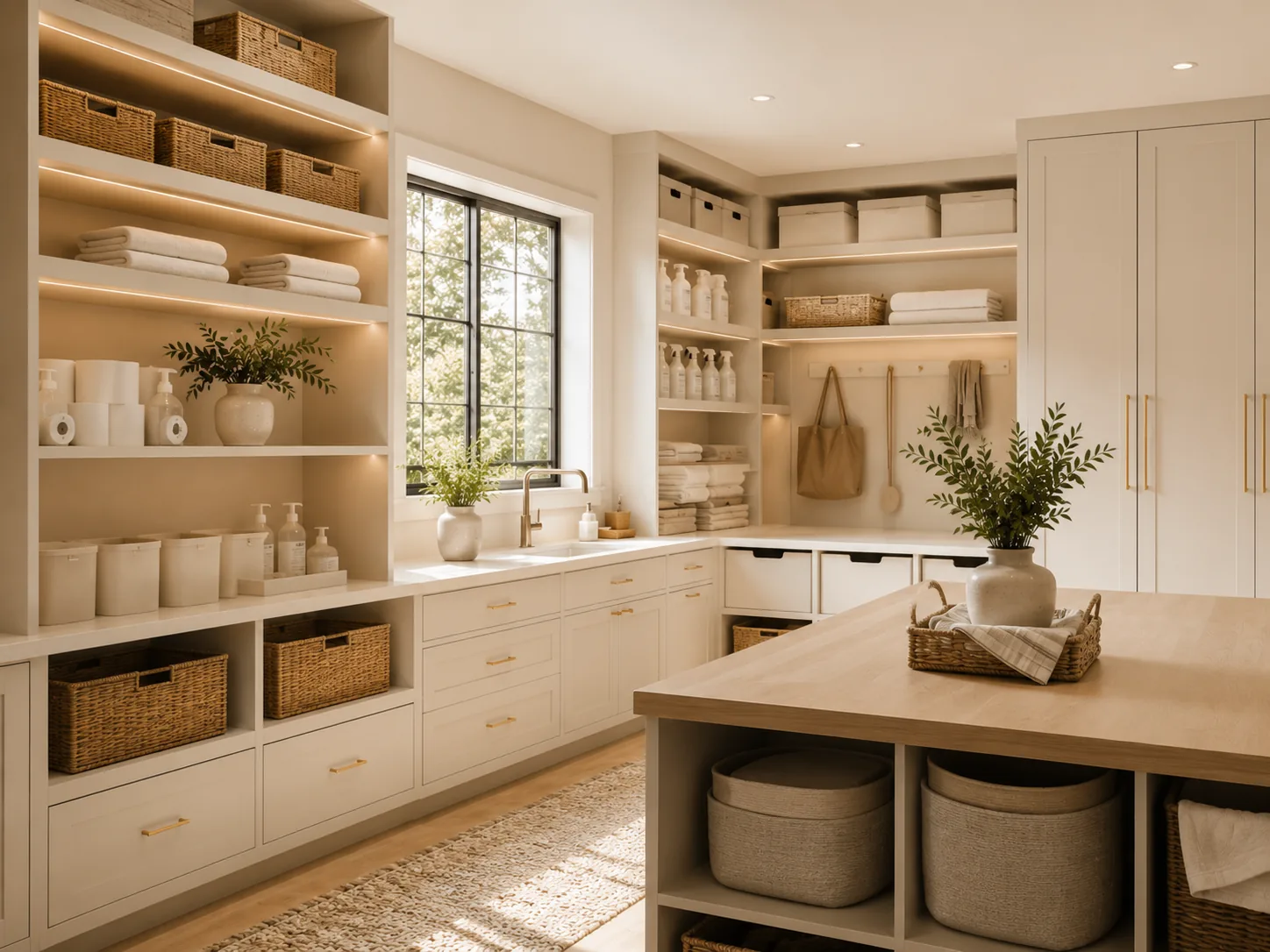
Avoid designing around an unresolved pile.
A crowded closet can contain daily essentials, seasonal items, things awaiting repair and belongings that no longer fit your life. If all of those are treated as permanent inventory, the proposed storage may solve yesterday’s needs rather than today’s.
Begin with a contained category and identify what is definitely staying. You do not need to make every difficult decision at once. Even a partial inventory can reveal which storage needs are clear and which remain uncertain.
Notice whether the problem is volume or access.
Sometimes there are simply more belongings than the available space can comfortably hold. In other cases, the right amount of storage exists but is poorly arranged. Deep shelves, blocked drawers or categories scattered across rooms can create frustration without a true shortage of capacity.
Describe the problem in terms of a task: finding shoes, putting groceries away or clearing the desk. That gives the design conversation something more precise to address than “I need more cabinets.”
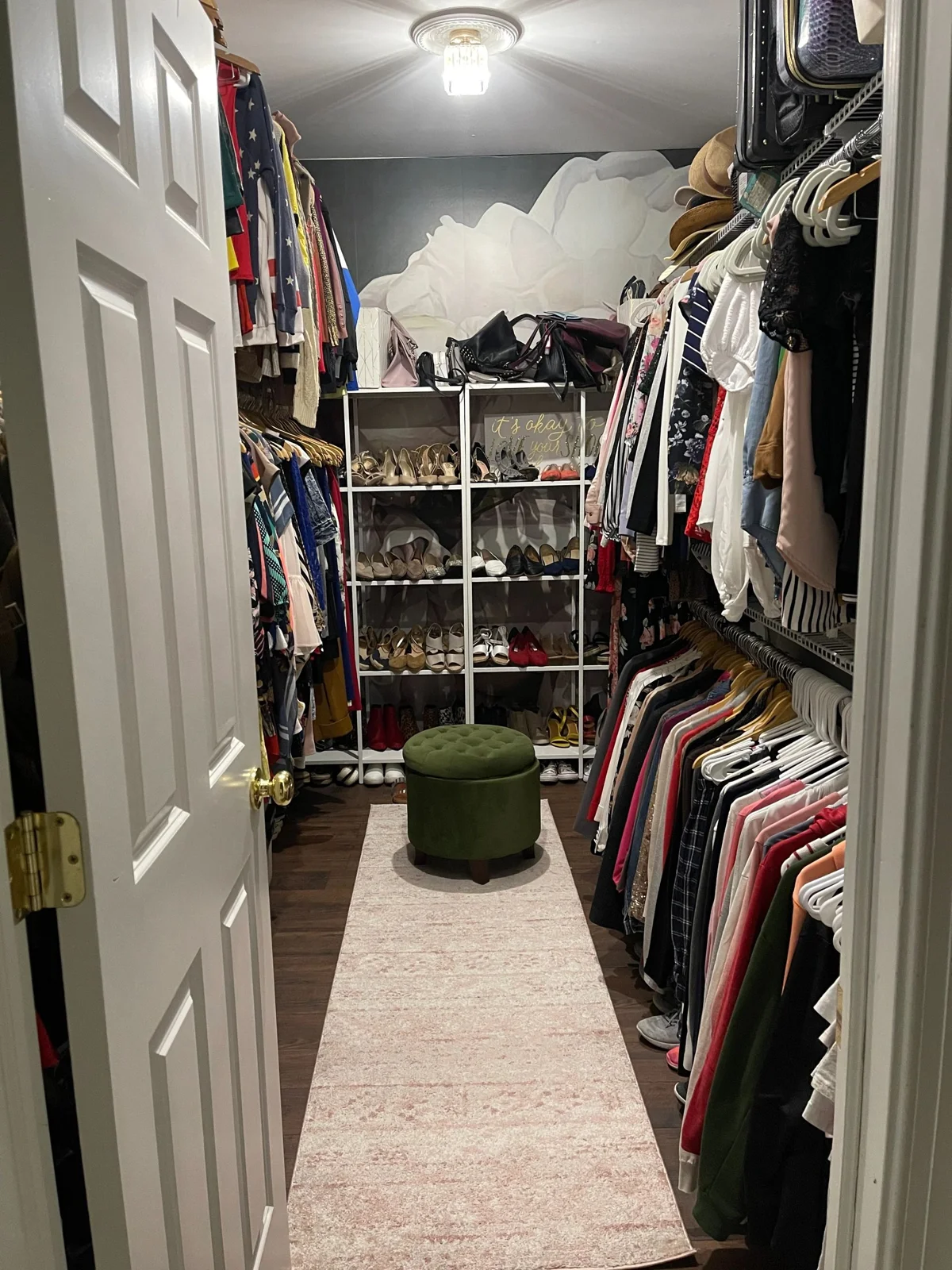
Keep the decisions in your hands.
An organization plan should reflect your priorities. A frequently used collection, a hobby or meaningful keepsakes may deserve deliberate storage even if another household would make a different choice. The point is to understand the belongings, not to impose an arbitrary ideal of minimalism.
If a category is difficult to sort, record that uncertainty. A designer can discuss the space requirements without pretending the decision has already been made.
Delay container shopping.
Buying organizers early can create a second inventory problem: containers that do not fit the final shelves or the categories you keep. Establish the function and location first, then choose appropriate containers where they help.
Try a temporary category arrangement with what you already have. It can reveal whether a frequently used item belongs in a different room or whether one large category needs to be divided.
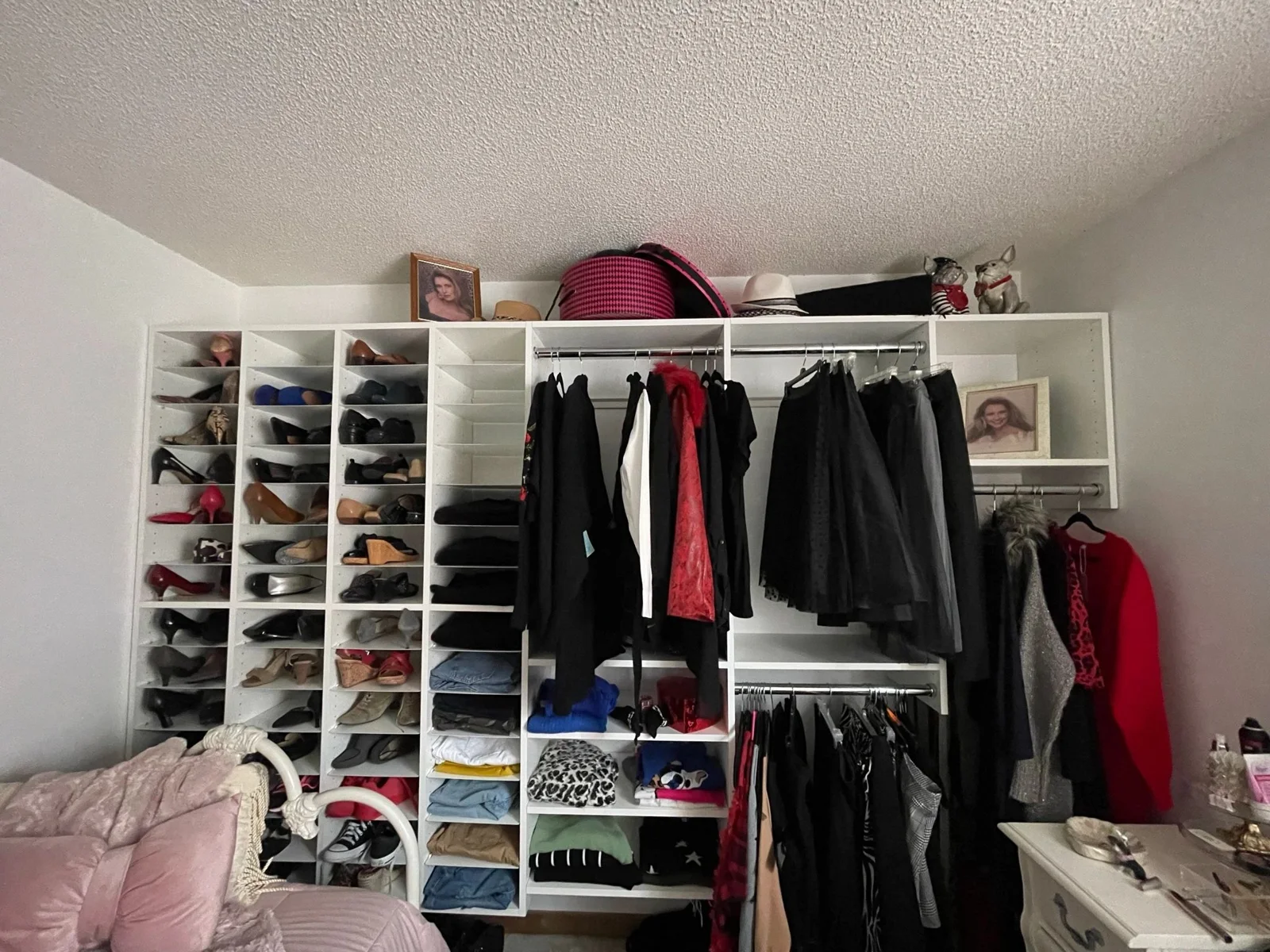
Bring the unfinished picture to the consultation.
Photographs of the space as used are informative. Include the areas where belongings accumulate and the storage that remains partly empty. Explain what you have already tried and why it did not last.
Organization and cabinet design can be considered together. The resulting scope might be a new system, a smaller change or a better use of existing storage. The aim is to identify the change that addresses the actual friction.
Use a Small Trial to Separate Clutter from Layout
Choose one drawer or one short hanging section. Remove belongings that clearly belong elsewhere, group the remaining items and use the space for several days. If access improves immediately, part of the problem may be categorization. If the same items still cannot be reached or returned, the layout deserves attention.
Keep uncertain belongings in a separately identified group while you decide. That prevents a temporary decision from becoming the basis of a permanent cabinet. You can bring that uncertainty to Sara; a useful consultation does not require a perfectly edited home.
Compare the Choices
| Choice or situation | What to consider | What to check |
|---|---|---|
| Too much inventory | Decide what stays and what moves elsewhere. | More cabinetry may only postpone the decision. |
| Poor access | Review shelf depth, openings and storage location. | Containers cannot fix a blocked drawer. |
| Unclear categories | Test a simpler grouping. | Avoid buying accessories before the grouping works. |
Put This into Practice
- Document one task that remains difficult.
- Separate definite keepers from undecided items.
- Bring photos showing both crowded and underused storage.