

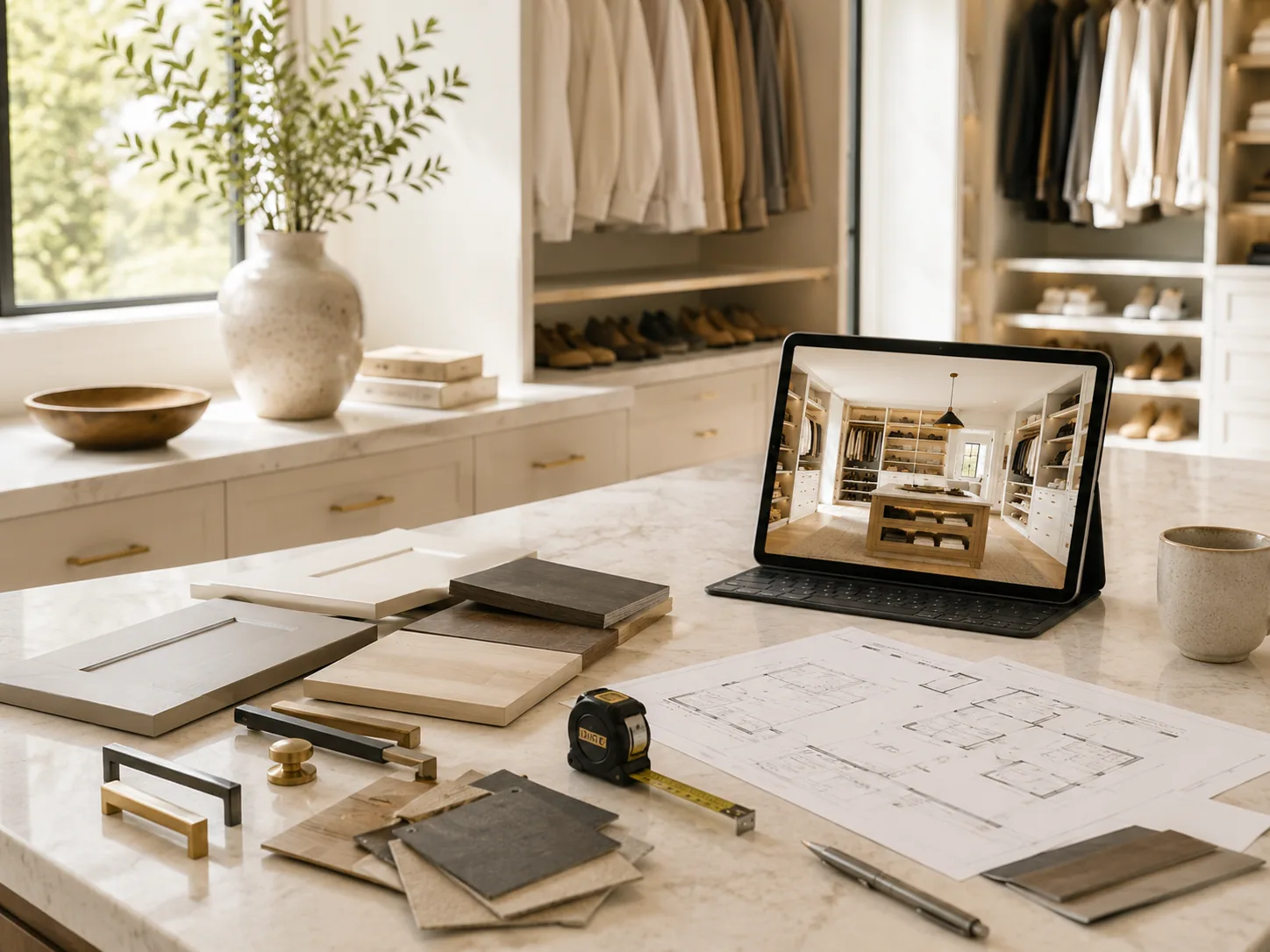
Start with the surfaces you are keeping.
Flooring, wall color, countertops and nearby furniture all affect how a cabinet finish is perceived. Collect information about those fixed elements before selecting a new finish in isolation. A neutral that looks quiet on its own may look pink, yellow or gray beside another material.
If the room is being renovated, distinguish approved selections from possibilities. Otherwise, you can end up choosing every material to coordinate with another material that is still undecided. A small, clearly labeled sample group makes the discussion more focused.
Compare a small group rather than an endless wall.
Choose two or three directions that meet the overall brief. Include the finish names so they can be identified accurately later. Compare them side by side, then remove one if it is clearly inconsistent with the room. You are looking for a coherent combination, not a winner in an isolated beauty contest.
Collection names organize samples, but they do not automatically describe a price, durability tier or compatibility with every cabinet system. Confirm what the selected finish actually represents before treating the name as a specification.
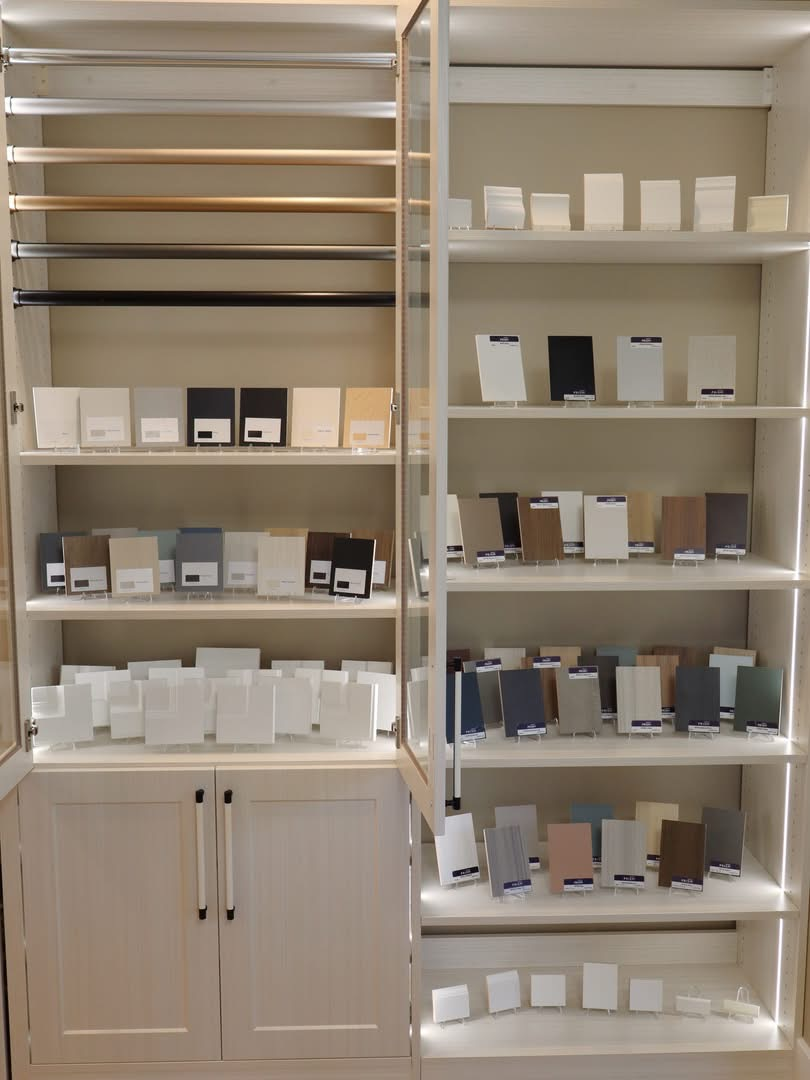
Look at grain and scale.
A wood-inspired sample contains only part of the visual information that appears across a wall of cabinetry. Think about repeated grain, the direction of doors and drawers, and whether large uninterrupted surfaces will make the pattern feel more prominent. A surface you love in a small piece may need restraint in a larger room.
Conversely, a subtle texture can add interest without a strong color change. Ask to consider the finish in relation to the actual cabinet elevations, not just the floor plan.
Review the room at different times.
Daylight and electric light can change the appearance of the same sample. Review it in the room when practical, and discuss the lighting that will remain or be added. Avoid making the final decision from a phone photograph of a sample: the camera and screen introduce another interpretation.
There is no single universally correct undertone. The useful question is whether the material combination supports the feeling you want and remains acceptable under the conditions in which you use the room.
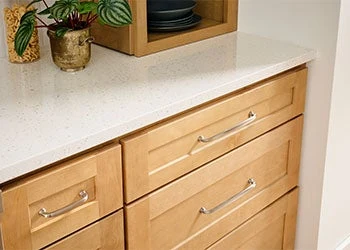
Confirm the whole combination.
The final selection includes more than a color name. Confirm the cabinet system, substrate, profile, hardware and any edge or molding detail. Product families can have different available combinations even when sample colors appear similar.
Save the agreed finish names with the project documents, and distinguish them from earlier alternatives. Clear selection records help prevent a familiar-looking sample from being mistaken for the approved product later.
Compare Samples Without Changing Every Variable
Place your shortlisted cabinet samples against the same flooring or countertop sample, in the same location. Keep the comparison small enough that you can describe the differences. If one sample feels too yellow beside the floor, record that observation instead of simply writing “not right.”
Next, stand the cabinet sample vertically when that reflects the intended use. Compare it in daylight and with the room’s normal evening lights. A horizontal sample on a desk is not the same visual situation as a full-height cabinet door.
Imagine a room with warm oak flooring and a cool gray wall. Selecting the whitest cabinet sample in a showroom does not resolve that relationship. You might prefer a softer neutral, or decide the wall color should change. Establish which surface is fixed before judging the cabinet choice.
Compare the Choices
| Choice or situation | What to consider | What to check |
|---|---|---|
| Solid color | Read the undertone beside fixed surfaces. | Do not judge white samples against white screens. |
| Wood or wood-inspired finish | Look at grain direction and repetition. | A small sample does not show an entire cabinet run. |
| Texture or leather accent | Compare the tactile detail with the base cabinet finish. | Confirm the exact product and application, not only the color name. |
Put This into Practice
- Keep finish names with the physical samples.
- Review both daytime and evening lighting.
- Record the approved finish, cabinet line, profile and hardware together.