

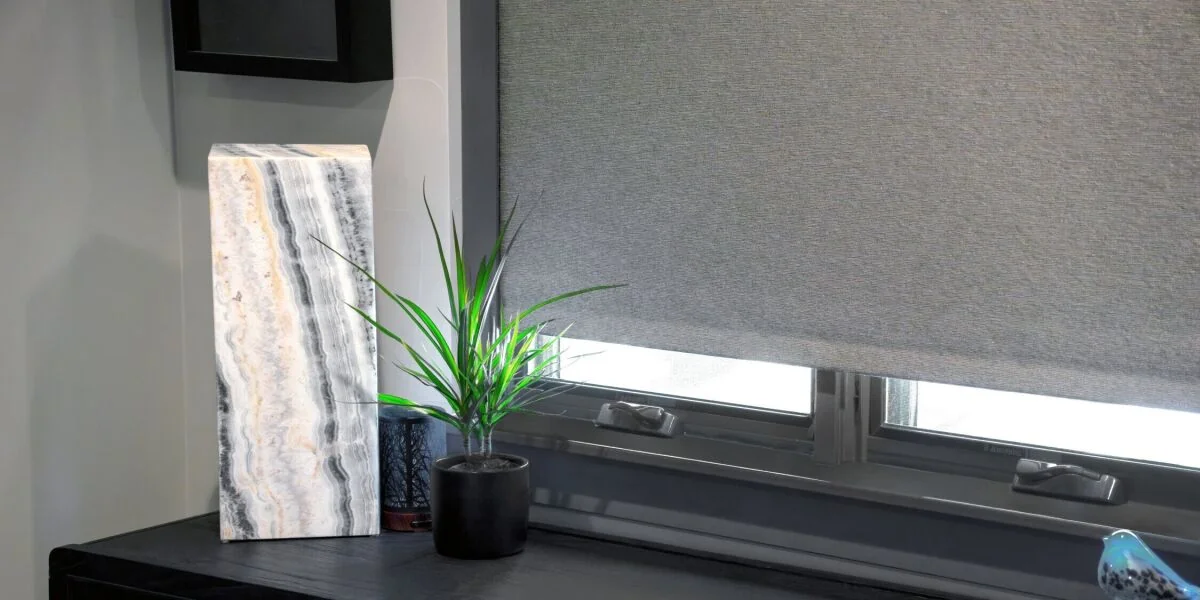
Decide how the room should feel during the day.
Some rooms benefit from softened daylight. Others need a stronger reduction in incoming light at particular times. Think about activities rather than room names alone: reading, screen use, rest and entertaining can create different preferences in the same space.
Make those priorities specific. “Less bright in the afternoon” gives a clearer starting point than “a darker fabric,” because fabric color alone does not define the result.
Separate privacy from darkness.
A private room does not necessarily need to be dark, and a room with less glare is not necessarily private at night. Describe the level of visual screening you need and when you need it.
The supplied Insolroll selection distinguishes privacy and blackout directions. Review the actual fabric rather than treating the names as interchangeable or assuming every collection has the same performance.
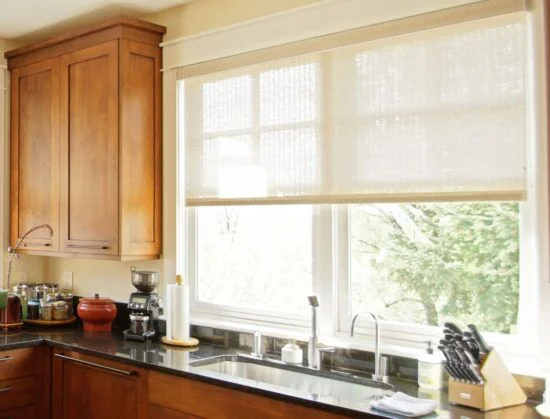
Review the complete installation.
Blackout fabric does not mean a guaranteed completely dark room. The mounting arrangement, gaps around the shade and the window conditions affect the finished result. A fabric sample cannot show all of those factors.
If reducing light is a high priority, explain the use case clearly and ask how the full assembly addresses it. Discuss realistic expectations before the product is ordered.
Consider two functions where necessary.
A room may need a view and controlled daylight during the day, then greater privacy or light reduction at another time. A dual-shade arrangement can be a direction to review when one layer does not meet both goals.
The additional layer needs mounting space and a clear operating plan. Compare the complexity with the benefit for your routine rather than assuming more layers are always better.
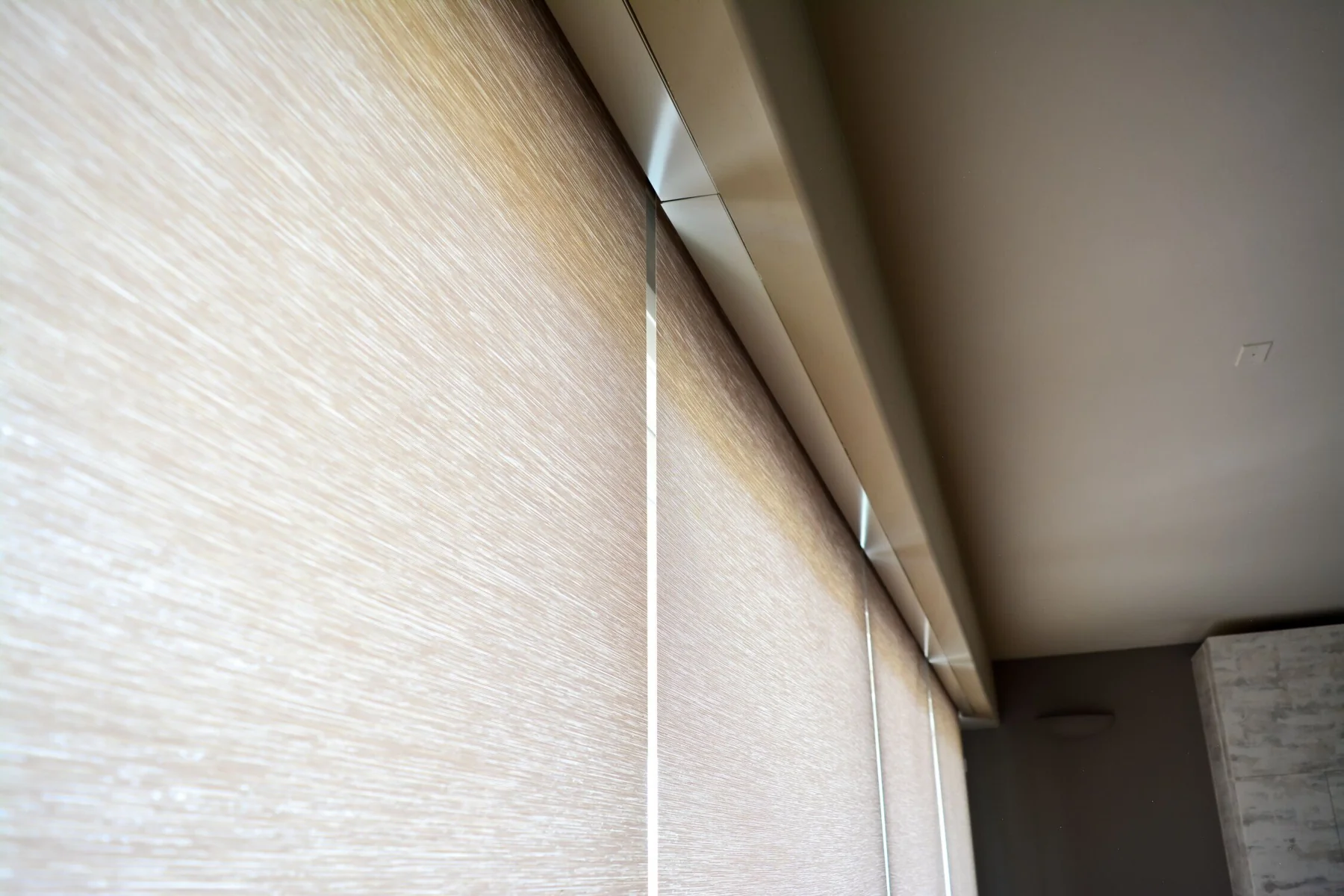
Use samples to support a clear brief.
Bring room photos and explain when the light becomes difficult. Include any existing window treatment you intend to keep. Review color and texture after the functional direction is understood.
A successful selection connects the fabric to the opening and the activity. Confirm the product, mounting approach and operating method together so the final decision is more than a color choice.
Distinguish the Fabric from the Finished Room
A blackout fabric can block light through its surface while light still enters around the installation. If the goal is a dark bedroom for daytime sleep, ask how the complete system deals with the sides, top and bottom. A fabric label alone does not answer that question.
For a living room, the priority might instead be softer daylight without losing the room’s daytime character. Discuss privacy independently: light filtering is not a precise promise of what someone outside can see. When the room has two different uses, compare a layered treatment with a single compromise fabric.
Compare the Choices
| Choice or situation | What to consider | What to check |
|---|---|---|
| Light filtering | Softens the daylight experience. | Verify privacy characteristics for the particular fabric. |
| Blackout fabric | Blocks light through the fabric. | Review light entering around the assembly. |
| Dual shade | Provides separate layers for different functions. | Needs suitable mounting space and an operating plan. |
Put This into Practice
- Describe whether the priority is view, privacy or darkness.
- Show existing trim and treatments that remain.
- Ask what the completed system can realistically achieve.
Product References
Consult the manufacturer’s information and confirm the exact specification for your project.