

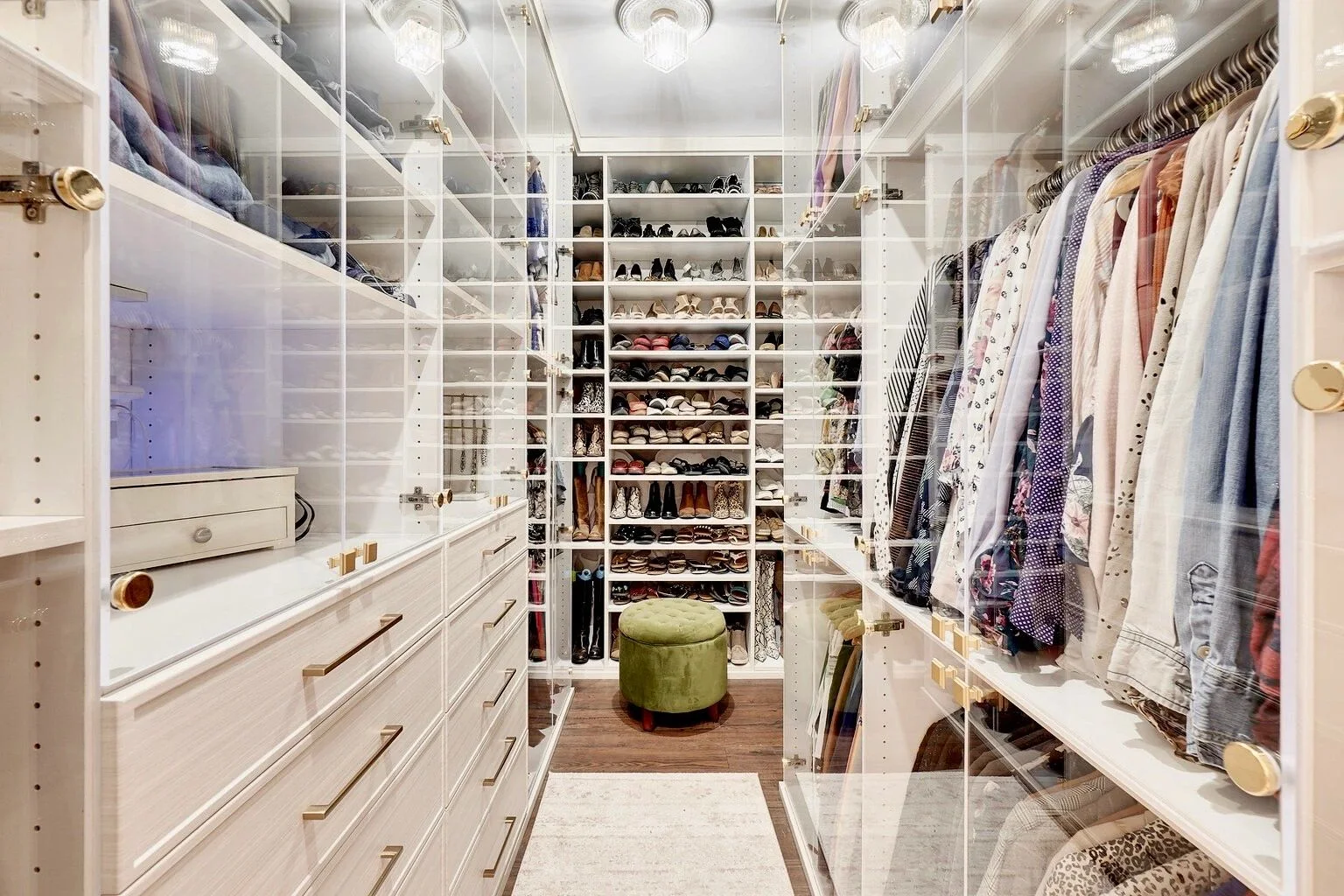
Decide what deserves to be visible.
An open shelf can make a favorite bag or pair of shoes part of the room. It can also turn everyday overflow into a visual focal point. Choose display categories deliberately and be realistic about how much maintenance you enjoy.
If your wardrobe changes quickly or you prefer to put things away without styling them, a larger proportion of doors and drawers may suit you. A dressing room should support the owner, not require the owner to perform for the room.
Give practical storage equal attention.
The less glamorous categories still need a home: folded basics, laundry in transition, seasonal pieces and small accessories. If those items are not accounted for, they will occupy the display areas eventually.
Start with the inventory before deciding how much open shelving looks attractive. A good mix of storage types can create a calm appearance while keeping the items used each morning accessible.
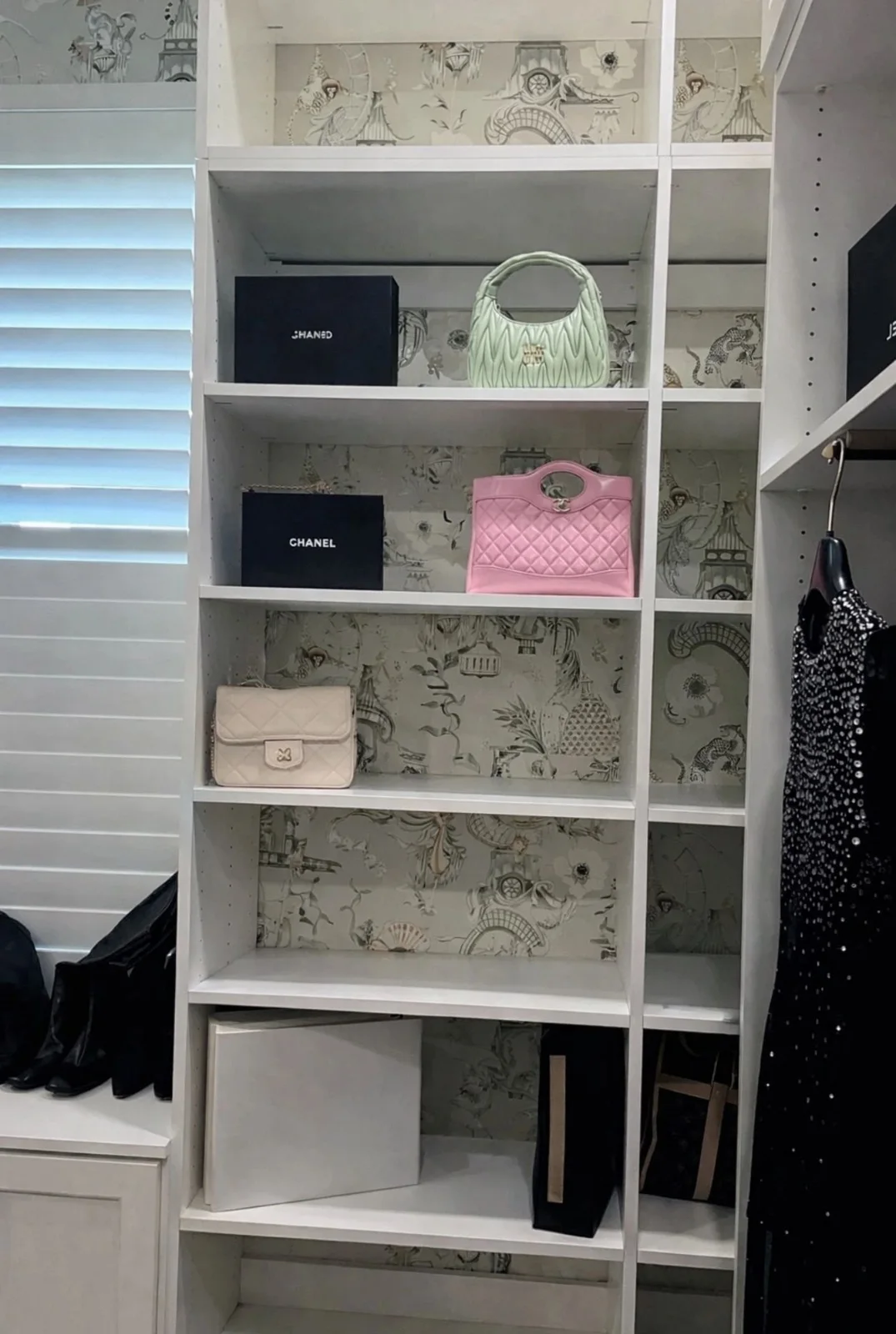
Use repetition to create order.
Consistent shelf proportions, a limited material palette and deliberate alignments can make a room feel cohesive. This does not require every compartment to be identical. It means that variations serve a purpose rather than appearing accidental.
Review the room as a whole, including the view from the entrance. A focal display can be supported by quieter cabinetry around it, giving the eye a place to settle.
Consider texture without overloading the palette.
A selected leather accent or a contrasting finish can distinguish a display area from the rest of the storage. Confirm the actual product, application and compatible cabinet details. Texture names do not establish material performance or universal suitability.
Keep nearby hardware, flooring and lighting in the conversation. An accent feels more considered when it has a clear relationship to those elements rather than arriving as an isolated decorative addition.
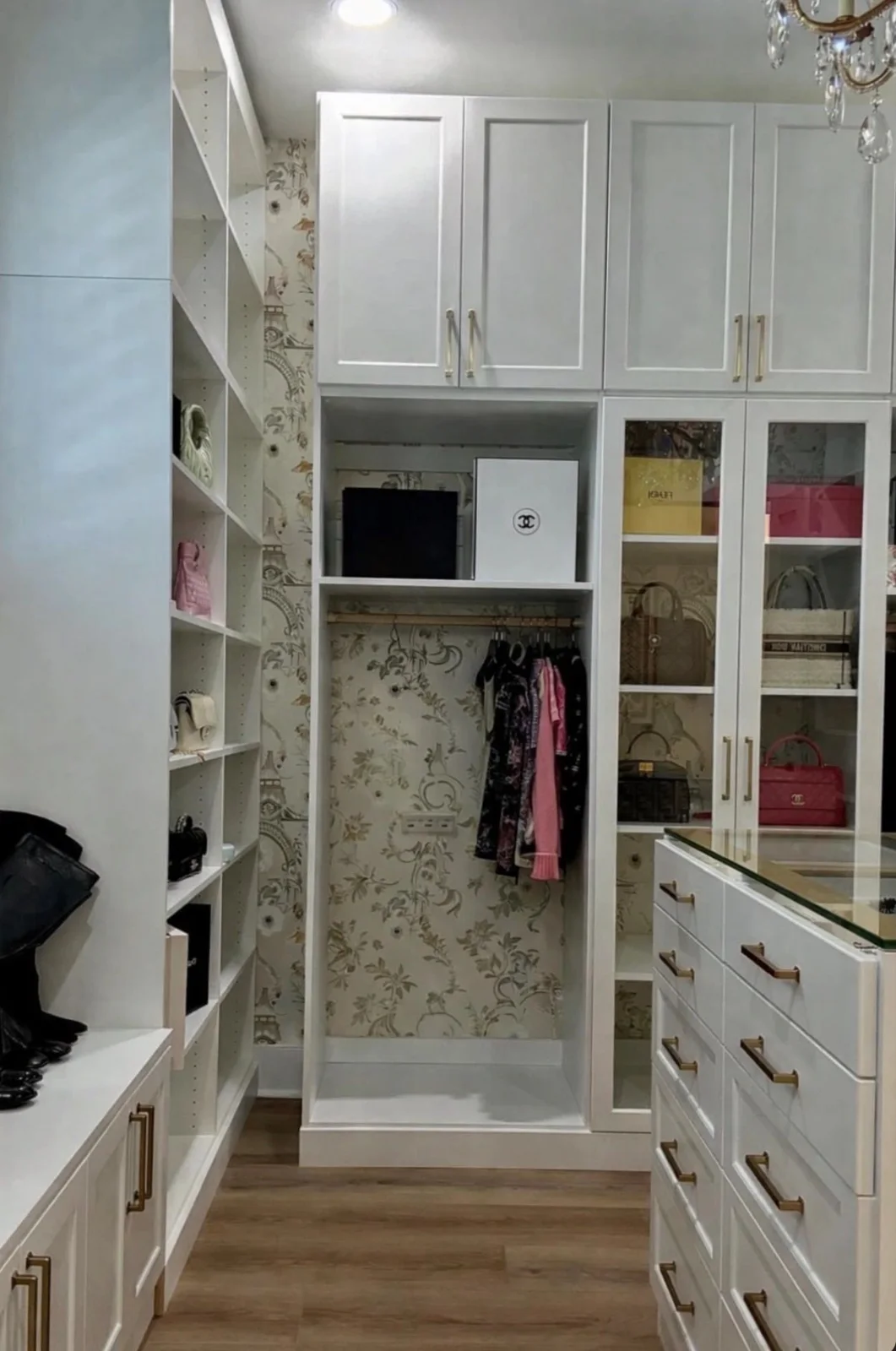
Design a simple reset.
Ask what happens at the end of an ordinary day. Is there somewhere for the bag in use? Where do small accessories go? Can clean clothing be returned without rearranging a display?
A room with clear homes for those items can remain attractive through normal use. The most successful display is often the one with enough practical storage behind it that the visible shelves are not constantly asked to solve another problem.
Design for an Ordinary Morning, Not Just a Photograph
Choose a small display collection first: perhaps a few bags, favorite shoes or a single accessory category. Then account for everything that will not appear in that display. Everyday basics, laundry and partially worn clothing still need places that do not take over the focal shelves.
Try a simple test with your existing storage. Leave the proposed display category visible for a week and notice how much resetting it requires. If the arrangement feels like another chore, reduce the open display and add more concealed storage. The objective is to enjoy the room on a normal workday.
Compare the Choices
| Choice or situation | What to consider | What to check |
|---|---|---|
| Open display | Easy visibility and a personal focal point. | Requires regular editing and cleaning. |
| Glass-front display | Keeps the collection visible within a cabinet front. | Still shows crowded or mismatched contents. |
| Solid doors and drawers | Conceal mixed everyday categories. | Need internal organization to keep access clear. |
Put This into Practice
- Reserve storage for laundry and daily basics first.
- Bring the largest bag or shoe dimensions to the planning discussion.
- Review lighting and privacy alongside the material palette.